
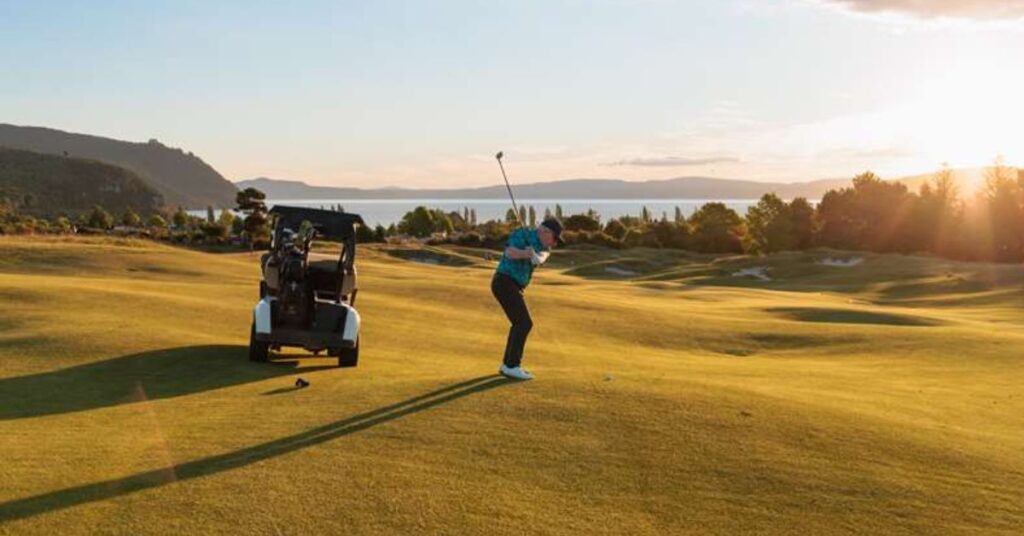
There’s a ceiling to what the same eighteen holes can teach. It gets reached faster than most golfers expect. The same tee shots, the same trouble on the left at the par four, the same putt that breaks more than it should on the fourteenth. Familiarity stops being comfortable and starts being stagnant. And somewhere in that stagnation, the serious golfer starts looking at a map.
Golf holidays are where the game goes somewhere it can’t reach from the same Tuesday evening tee time.
1. Different Conditions Make Better Players
Links golf in Ireland or Scotland requires things that inland parkland courses never demand. The wind is a real variable. The ground game matters as much as the aerial one. A bump-and-run along a firm, fast-running fairway is not a shot that gets practiced at a tree-lined parkland course in the English Midlands. Playing it badly on the Dingle Peninsula is how it eventually gets played well anywhere.
Dry conditions in Spain change distance control in ways that wet English turf doesn’t prepare players for. The ball runs out twenty yards further than expected, the first time. Then the adjustment happens, and something clicks. Golf holidays that change the playing surface and conditions accelerate development in ways that more rounds on the same course simply don’t.
2. Some Courses Are Worth Playing for Their Own Sake
Ballybunion on a clear day. Royal County Down with the Mournes behind it. Valderrama in late autumn when the conditions are at their most demanding. These places have reputations because they’re genuinely exceptional. Not exceptional in a relative sense. Exceptional in the absolute sense that the experience of playing them is categorically different from playing a good local course.
Something about standing on a first tee that professionals have stood on, on a course with a specific character and history, sharpens concentration in a way that’s difficult to manufacture at home. Serious golfers know this feeling. Golf holidays that deliver it tend to produce rounds that get talked about for years afterwards.
3. The Trip Does Things the Tuesday Evening Medal Can’t
Golf with familiar people in a different country is not the same dynamic as golf with familiar people at the same club. The routines are gone. The usual obligations are two thousand miles away. Rounds take on a relaxed quality that doesn’t arrive when the same players tee off at 7:40 on a Wednesday morning under grey skies. Conversations go further. The post-round dinner goes longer. The stories that come out of golf holidays have a durability that monthly medal results don’t.
4. Winter Travel Keeps Form from Eroding
Playing through a British winter on soft, waterlogged ground in four layers is sufficient for keeping the swing moving. It is not sufficient for playing good golf. The course conditions don’t allow it. The weather doesn’t encourage it. Golf holidays to Spain, Turkey, or Dubai in January and February let serious players continue playing actual golf, on proper ground, in weather that allows a full range of movement.
Players who travel in winter tend to arrive at spring club competitions in noticeably better shape than those who spent December through February grinding through mud. That’s not a coincidence. It’s the only logical result of having played good golf recently rather than survival golf.
The Return Is Hard to Argue With
Golf holidays cost money. Nobody is pretending otherwise. But weigh it against what the trip actually produces: improved game, memorable experiences, stories that stay in rotation for years, and rounds on courses that home club members will spend their whole golfing lives never seeing. The question isn’t whether the trip is affordable. It’s whether not taking it makes any real sense.



More Stories
Golfers with Wide Feet: How Extra Wide Golf Shoes Can Elevate Your Game
Why Wide Toe Box Hiking Boots Are a Game-Changer for Trail Walkers
The Different Types of Ball