
If you’ve ever finished a hike and peeled off your boots only to find a tender big toe, a bruised toenail, or a blister forming in a place you didn’t even know could blister, you’re not alone. Trail walking has a special talent for exposing tiny fit problems that never show up on a short city stroll.
Most of the time, the culprit is not the outsole, not the waterproofing, not the brand name. It’s the front of the boot. The toe box.
A wide toe box changes what your feet are allowed to do inside the boot: spread, swell, stabilise, and grip the ground naturally. That sounds small, but on uneven terrain, small becomes everything.
If you’re browsing wide toe box hiking boots because your toes feel cramped or you keep getting “toe bang” on descents, this guide will show you exactly why the toe box matters, who benefits most, and what features to look for so you stop gambling with your feet on every hike.
What “wide toe box” actually means (and what it doesn’t)
A wide toe box is not simply a boot in a larger size. And it’s not always the same thing as a “wide fit” boot.
It means the front of the boot is shaped to give your toes more room to sit naturally, rather than being tapered inward. Ideally, it also has enough height (depth) so the top of your toes doesn’t rub when you walk downhill.
That shape matters because toes are not decorative. They’re part of how you balance, push off, and adjust on uneven surfaces.
A helpful baseline from orthopaedic guidance: shoes with a square or round toe box provide more room and allow toes to lay flatter, while pointed shapes crowd toes and can cause discomfort.
Why trail walking punishes your toes more than normal walking
Walking on pavements is consistent. Trails are not.
On a hike, your foot is constantly dealing with:
- Uneven ground and side slopes
- Repeated downhill sections where your foot slides forward
- Roots and rocks that make you “grab” with your toes for stability
- Longer time on feet, which increases swelling as the day goes on
REI’s hiking boot guide puts the fit goal in a way that’s easy to remember: hiking footwear should fit snug everywhere but tight nowhere, and you should have room to wiggle your toes.
That toe room is not a comfort bonus. It’s a pressure-management feature.
The downhill problem: “toe bang” and bruised nails
On descents, your foot naturally shifts forward. If the toe box is tight or short, your toes hit the front repeatedly. Over time, that can lead to bruised nails and pain that ruins the rest of the hike. Outdoor hiking publications even call out the finger-width space rule specifically to prevent toenail damage on descents.
A wide toe box doesn’t magically stop your foot moving forward, but it gives your toes room so that movement doesn’t turn into constant impact.
The big benefits of a wide toe box on the trail
1) Less blister friction where it matters most
Blisters are usually a friction story. Tight toe boxes increase rubbing on the sides and top of toes. They also push toes together, which creates hot spots between toes.
When your toes have space, the pressure spreads out. Your skin stops fighting the boot with every step.
FootCareMD (from the American Orthopaedic Foot & Ankle Society) also gives a simple, useful warning: don’t rely on shoes “stretching out” over time. They should fit well when you buy them, and the width at the ball of the foot should fit comfortably in the widest part of the shoe.
2) More stability on uneven terrain
On trails, balance is not just ankles and knees. Toes play a role in stabilising and adjusting your stance on rocks, gravel, and mud.
If toes are squeezed, that stabilisation gets worse. You might not notice it consciously, but you’ll feel it as fatigue, awkward footing, and that “my feet feel clumsy” sensation late in a hike.
3) Comfort that holds up when feet swell
Feet swelling during long walks and hikes is extremely common. That’s why so many boot-fitting guides recommend trying on footwear later in the day and allowing extra room. For example, NHS Borders’ footwear guide describes leaving roughly a thumb’s width between your longest toe and the end of the shoe.
A wide toe box gives you a buffer when swelling turns your “fine” boot into a “why does this hurt” boot.
4) Fewer nail problems over time
Toenail bruising is one of those hiking issues that seems like bad luck until it keeps happening. It’s often a fit and lacing issue: not enough toe room, or not enough heel lock on descents.
A wide toe box helps by reducing repeated impact at the front, especially when combined with correct lacing.
Who benefits most from wide toe box hiking boots?
Lots of people, but these groups in particular tend to feel the difference immediately.
Trail walkers with wide forefeet
Some feet are simply broad across the ball. If you regularly blow out the side fabric of trainers, or your little toe always feels sacrificed, you’re a classic wide-toe-box candidate.
Anyone who gets toe pain or bruised nails on descents
If downhill sections leave your toes sore or nails tender, you need either more room, better heel lock, or both. A wide toe box is a strong first move.
People with bunions, hammertoes, or toe crowding
Crowding + long walks is a recipe for pressure points. More forefoot room means less rubbing on prominent joints.
Hikers who swell as the day goes on
If your boots feel okay at breakfast and tight by mid-afternoon, the toe box isn’t giving your foot enough “expansion room.”
Hikers who wear thicker socks
On colder hikes, thicker socks can instantly turn a borderline fit into a problem. A roomier toe box keeps warm socks from becoming a squeeze.
People with diabetes or reduced sensation
If you have diabetes, fit matters even more because friction and pressure points can lead to skin problems more easily, and reduced sensation can hide those problems until they’re advanced. Diabetes UK’s foot-care guidance includes making sure footwear fits properly as a daily habit.
What to look for when shopping
A wide toe box is the headline feature, but you’ll get the best results when the rest of the boot supports it. Here’s what actually matters.
Toe box shape and depth
Look for a toe front that’s more round or square than tapered. And check height as well as width.
A boot can be “wide” but shallow, and shallow toe boxes still cause rubbing on top of toes, especially downhill.
Secure heel hold (so your foot doesn’t slide forward)
This is the quiet secret to comfort on descents. A wide toe box helps, but if your heel lifts and your foot slides, your toes will still slam the front.
This is where lacing matters too. REI and many fit guides talk about snug-but-not-tight fit and toe wiggle room, but the heel has to be locked in.
Proper width at the ball of the foot
FootCareMD’s guidance is simple: the widest part of your foot should sit comfortably in the widest part of the shoe.
If it doesn’t, you’ll get side pressure and hotspots even if the toe box looks roomy.
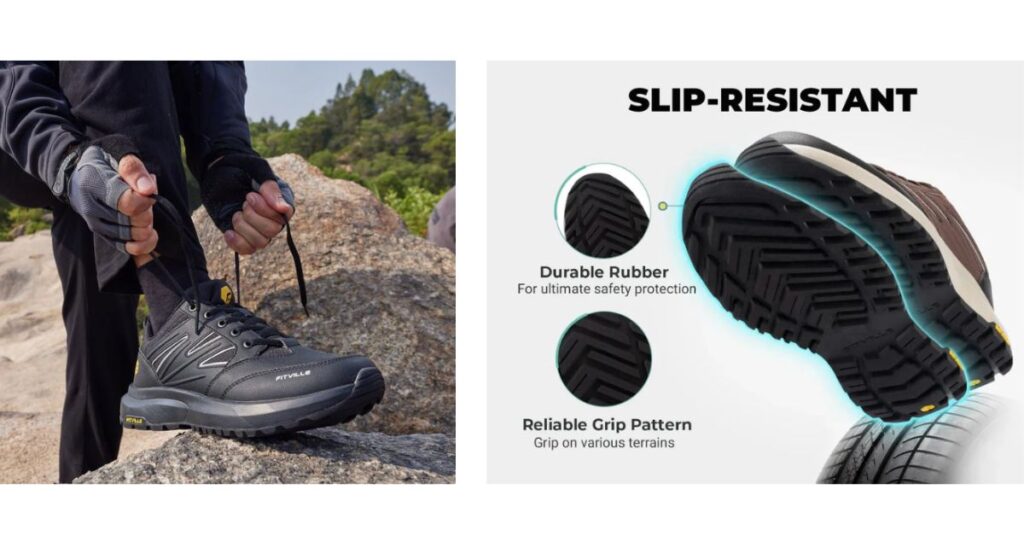
Outsole traction and stability
If you hike on mixed terrain, traction is not optional. A wide toe box helps comfort, but grip helps safety and confidence.
Cushioning that doesn’t feel wobbly
Too-soft boots can feel nice in a shop, then tiring on a trail. You want cushioning plus a stable platform.
Upper material that matches your terrain
- Wet, muddy hikes: waterproofing matters, but remember waterproof membranes can reduce breathability.
- Hot-weather hikes: breathability becomes more important, because sweaty feet blister faster.
Boot height: hiking shoe vs mid vs full boot
- Hiking shoes: lighter, more flexible, good for well-maintained trails
- Mid boots: more ankle structure, good for rougher terrain and moderate loads
- Full boots: more support for heavy packs and rugged conditions
There’s no universal “best.” There’s only “best for your trails.”
Fit checks that prevent regret
Don’t buy boots the way people buy casual trainers. Use a quick test that simulates real hiking.
1) Try them on later in the day
If you swell, morning fitting can trick you. NHS footwear guidance often recommends shopping later in the day when feet are larger.
2) Wear hiking socks
Bring the socks you’ll actually hike in. This changes fit more than most people think.
3) Do a downhill simulation
In a shop, find a ramp or incline. If you can’t, do this:
- Lace the boots normally
- Walk briskly, then stop suddenly
- Pay attention to whether toes hit the front
If your toes touch the front on a fake “downhill moment,” they’ll slam the front on a real descent.
4) Check toe wiggle room
REI’s advice is straightforward: you should have room to wiggle your toes, and the boot should be snug but not tight.
5) Don’t buy “almost comfortable”
FootCareMD’s warning about not counting on stretching is worth repeating.
If it feels tight now, it’ll feel worse after 10,000 steps.
A practical way to start comparing options
If you want to compare shapes and fits designed for trail comfort in one place, it’s easier to start with a curated collection than to jump between ten brands and inconsistent sizing notes.
Use it like a filter: look at toe shape, width options, and whether the boot design seems built for real toe space rather than a narrow fashion profile.
Common myths that keep hikers stuck in the wrong boots
Myth 1: “Hiking boots should feel tight so they’re secure”
Secure is good. Tight is not. Tight boots restrict toe movement, increase friction, and can reduce comfort sharply as swelling increases.
Myth 2: “You need to suffer through break-in”
A short adjustment period is normal. Pain and hotspots are not. If you feel rubbing immediately, you’ve found a future blister.
Myth 3: “Going up a size fixes everything”
Sizing up in length to solve width often creates heel slip and toe slam. Solve width with width and toe box shape first.
Myth 4: “Wide toe box means sloppy fit”
Only if the boot is poorly designed. The goal is roomy toes with a secure heel and midfoot.
FAQs
Are wide toe box hiking boots only for people with wide feet?
No. They’re also useful for hikers whose feet swell, hikers who wear thick socks, and anyone who gets toe pain or bruised nails on descents.
How much space should I have in front of my toes?
Many guides use a “thumb width” or “finger width” rule of thumb. NHS Borders describes roughly a thumb’s width between your longest toe and the end of the shoe.
The goal is to prevent toe impact on descents while still keeping the boot stable.
Will a wide toe box stop blisters completely?
It reduces one major cause: friction from toe crowding and side pressure. But blisters can also come from moisture, poor socks, and heel slip. Fit still matters everywhere, not only the front.
Do I still need good lacing if the toe box is wide?
Yes, especially for downhill sections. A wide toe box helps, but heel lock prevents your foot sliding forward.
Are wide toe box boots better for long-distance hikes?
Often, yes, because swelling and repeated pressure build over time. More toe room can keep comfort stable late in the day.
What if my heel feels loose in a wide toe box boot?
That’s a design or lacing issue. Look for stronger heel counters and better midfoot hold. If the heel keeps slipping, you’ll still get friction.
Are they useful for bunions?
Yes, because more forefoot space can reduce pressure on the big toe joint. You still want a shape that doesn’t press directly on the bunion area.
Should diabetics prioritise wide toe boxes?
Fit and pressure management are important in diabetes foot care, and guidance commonly emphasises properly fitting footwear.
If you have diabetes, it’s also smart to follow clinician advice and do regular foot checks.
Hiking boot or hiking shoe for wide toe boxes?
If your trails are smoother and you want light weight, hiking shoes can work well. For rougher ground or heavier loads, mid boots can add structure. The toe box benefit applies to both.
Why this one feature changes the whole hike
Trail walking asks a lot from your feet. It asks them to adapt, stabilise, climb, descend, and stay comfortable while swelling and fatigue build.
A cramped toe box turns that into a daily battle. A wide toe box turns it into something you can actually enjoy.
If you’ve been dealing with sore toes, bruised nails, or recurring hotspots, this is one of the highest-impact changes you can make without changing your fitness level, your walking style, or your route. Start with toe room, then pair it with secure heel hold and the right socks.



More Stories
Why Serious Golfers Are Prioritizing Travel Experiences
The Different Types of Ball
Dallas Mavericks Vs Boston Celtics Match Player Stats