
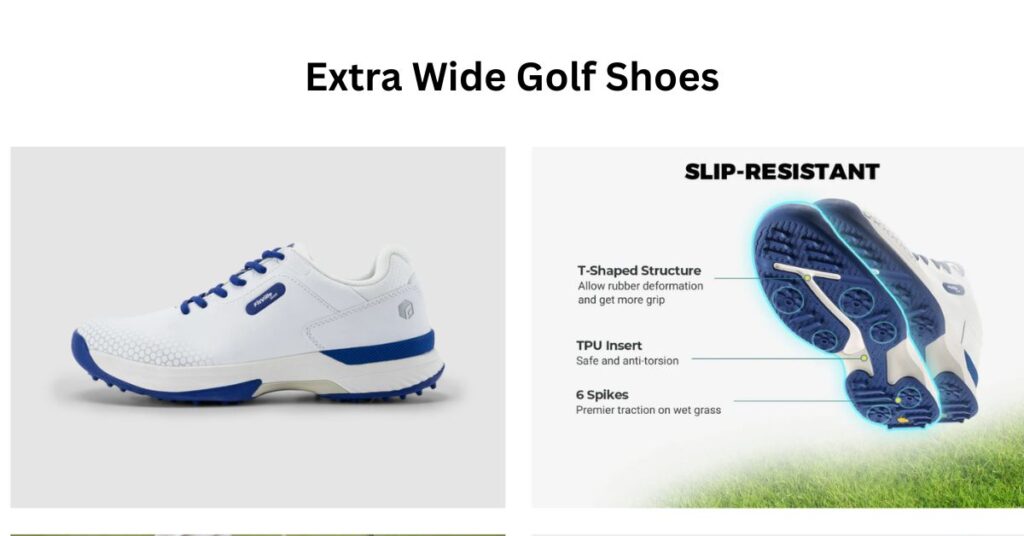
Golf can look effortless when it is played well.
A balanced takeaway, clean contact, smooth follow-through, and the ball flying exactly where it should. But underneath that calm rhythm is something many players do not think enough about. The feet are doing serious work from the first tee to the last green. They stabilise the stance, support weight transfer, handle rotation, and carry the body through hours of walking, standing, and swinging.
That is why footwear matters far more than many golfers admit.
For players with wide feet, it matters even more.
A standard golf shoe may look sharp in the shop, but if it squeezes the forefoot, crowds the toes, or creates pressure across the upper, it can quietly affect comfort, balance, and confidence throughout the round. A golfer does not need to be in visible pain for bad footwear to interfere with performance. Sometimes the effect is subtle. The stance feels less settled. The lower body feels tense. The walk between shots becomes more tiring than it should be.
This is exactly why more players are choosing extra wide golf shoes instead of forcing their feet into narrow designs that were never built for them in the first place.
Why wide feet create a different challenge on the course
A lot of golfers with wide feet get used to compromise.
They size up. They loosen the laces. They choose the softest upper they can find and hope the shoe will ease up after a few rounds. Sometimes that helps a little. Usually it does not solve the real issue.
The problem is shape.
Many golf shoes are still built around a slimmer profile because brands want them to look sleek and sporty. That may work for some players, but for a wide-footed golfer it often means the shoe feels tight where it matters most. The forefoot gets compressed. The toes lose space. The upper presses into the sides of the foot. After several holes, that pressure becomes hard to ignore.
Golf is not just a standing sport. It is a rotational sport. If your feet are uncomfortable, the rest of the body starts reacting to that discomfort.
A stable base can improve swing consistency
Every golf swing starts from the ground up.
Before the club comes back, your feet are already setting the foundation for everything that follows. They help establish posture, balance, and connection to the turf. As the swing unfolds, they manage rotation and shifting pressure from trail side to lead side. If that foundation feels unstable or uncomfortable, the body often compensates.
That is where proper golf shoes can genuinely help.
A better-fitting shoe gives the foot a more secure platform. It helps you feel planted without feeling trapped. That matters for wide-footed golfers because a cramped shoe often creates tension. Instead of feeling naturally grounded, the foot feels restricted. Instead of moving freely through the swing, the body subtly guards itself.
Extra width does not just add comfort. It can help the stance feel more natural, and when the stance feels natural, the swing often feels more repeatable.
Comfort affects performance more than golfers like to admit
Plenty of golfers separate comfort from performance as if they are unrelated.
They are not.
A player whose feet are hurting by the eighth hole is not in the same position as a player whose footwear still feels stable and relaxed. Golf is demanding in quiet ways. Even when you are not walking a championship-length course, you are still standing for long periods, walking uneven ground, climbing small slopes, and adjusting your footing for shot after shot.
If the shoes are too tight, the round becomes a slow build of irritation.
The toes start feeling crowded. The arch begins to tire. The sides of the forefoot feel rubbed or compressed. That discomfort affects concentration. It changes how freely you move. It can even change how willing you are to trust your lower body through the swing.
That is one reason golfers increasingly look for extra wide golf shoes that are designed to support both foot shape and full-round comfort rather than just offering a clean look in the clubhouse.
Why toe room matters on the golf course
Toe box space is one of the most overlooked parts of golf footwear.
For golfers with wide feet, it is one of the most important.
A narrow toe box can push the toes together and create constant pressure across the front of the foot. That may seem like a small annoyance at first, but over the course of four or five hours, it becomes a real problem. The foot never fully relaxes. The stance can feel tense. Walking between holes becomes less pleasant. The player starts noticing the shoes more than the game.
A wider toe area gives the forefoot room to settle naturally.
That does not mean the fit should feel loose or sloppy. It simply means the front of the shoe should respect the actual shape of the foot. When the toes are not being squeezed, the whole shoe feels calmer. For golfers with bunions, broader forefeet, or swelling during longer rounds, that difference can be immediate.
Traction matters, but only if the shoe fits properly
Golf shoes are meant to help you hold the ground.
That grip matters during the swing, especially in damp conditions, on sloped lies, or when you are trying to stay stable through a full turn. But traction alone is not enough. A shoe can have an excellent outsole and still fail the golfer if the upper fit is wrong.
If your foot is sliding because the shoe is too long, that is a problem. If your foot is cramped because the shoe is too narrow, that is also a problem. Good traction works best when the foot is sitting properly inside the shoe.
That is why extra wide golf shoes are so valuable for players who need them. They allow the outsole, cushioning, and support features to actually do their job because the fit is not undermining everything from the start.
Walking the course becomes far easier in the right shoe
A round of golf is not one movement repeated in isolation.
It is a full day on your feet.
That means the right golf shoe should perform between shots as well as during them. It should handle long walks across firm paths, damp grass, and uneven ground. It should support the foot during the hours where you are not swinging but are still carrying your body through the course.
This is where many golfers with wide feet feel the biggest change.
When the fit is right, walking becomes less draining. The foot is not being compressed every step of the way. The heel feels secure. The forefoot has room. The sole feels supportive without feeling harsh. By the closing holes, the round feels physically easier to manage.
That can make a real difference to how well you finish.
Wider shoes can help reduce foot fatigue
Foot fatigue is often treated as a normal part of golf.
Sometimes it is not.
Sometimes it is simply the result of wearing shoes that do not fit the way they should. A golfer with wide feet in a narrow shoe is asking the foot to work under constant pressure. That pressure does not just stay at the skin level. It affects how the foot moves, how stable it feels, and how long it can stay comfortable.
A properly fitted extra wide golf shoe reduces that strain.
The foot can spread more naturally. The shoe supports rather than compresses. The cushioning works better because the foot is sitting on the platform correctly. Over time, that means less irritation, less tiredness, and a more composed feeling throughout the round.
The game is hard enough without your footwear adding another layer of effort.
Why sizing up is not the answer
A lot of wide-footed golfers try to solve the problem by buying a longer size.
That rarely ends well.
A longer shoe may give a bit more room at the front, but it does not necessarily give proper width where the foot actually needs it. Instead, the golfer ends up with a shoe that is still narrow at the sides and now too long overall. That can create heel slip, awkward movement, and a less secure stance.
The smarter solution is to buy for width, not just length.
A genuine extra wide golf shoe is shaped differently. It is not merely longer. It is built to give the foot more realistic space across the forefoot and toe box while still keeping the heel and midfoot stable.
That difference is what makes the shoe feel right rather than merely tolerable.
Extra wide shoes can improve confidence as much as comfort
Golf is a confidence game.
If your feet feel unstable, cramped, or distracted, that lack of trust can seep into the rest of the round. You may not consciously think, “my shoes are affecting my game,” but your body feels it. You become less free through the swing. Less settled over the ball. Less comfortable walking into the next shot.
Good footwear removes that noise.
When a golfer knows the stance feels planted and the feet feel supported, it is easier to focus fully on the shot. That may not turn a mid-handicap player into a scratch golfer overnight, but it can absolutely improve how comfortable, balanced, and committed the player feels throughout the day.
That is part of why so many wide-footed golfers eventually move toward extra wide golf shoes. The benefit is not just relief. It is better overall trust in the way they move on the course.
What to look for in an extra wide golf shoe
The first thing is obvious but important. The shoe should actually feel wide enough from the beginning.
The forefoot should not feel squeezed. The toes should not be pressed together. The upper should not dig into the sides of the foot. The heel should still feel secure, and the shoe should feel stable when you walk and turn.
Look for a well-shaped toe box, supportive cushioning, solid traction, and a structured heel. Those features matter most when they work together. The best shoe is not simply the widest one. It is the one that gives your foot room while still supporting the movements golf demands.
Final thoughts
Golfers with wide feet should not have to choose between playing in pain and settling for poor fit.
The right extra wide golf shoes can improve comfort, reduce fatigue, support a more stable stance, and help the body move more naturally through a round. That does not just protect your feet. It can improve how confidently you walk, set up, rotate, and finish each shot.
Good golf starts from the ground.
If the ground connection feels wrong, the rest of the game has to work harder. But when the shoes fit properly and support the way your feet are actually built, the round often feels smoother from the first hole to the last.
That is not a small upgrade.
For wide-footed golfers, it can be one of the smartest equipment changes they make.
FAQs
Do extra wide golf shoes really make a difference?
Yes. For golfers with broad feet, they can reduce pressure, improve comfort, and create a more stable feel throughout the round.
Can golf shoes affect swing performance?
They can. A better shoe helps with balance, traction, and weight transfer, all of which influence swing consistency.
Is sizing up enough for wide feet?
Usually not. A longer shoe does not automatically provide the right width, and it can create heel slip or an awkward fit.
Are extra wide golf shoes only for players with very wide feet?
No. They can also help golfers with bunions, swelling, higher insteps, or anyone who feels cramped in standard golf shoes.
Should golf shoes feel tight for support?
No. They should feel secure, but not restrictive. A shoe that feels cramped usually becomes a bigger problem as the round goes on.


More Stories
Why Wide Toe Box Hiking Boots Are a Game-Changer for Trail Walkers
The Different Types of Ball
Dallas Mavericks Vs Boston Celtics Match Player Stats