
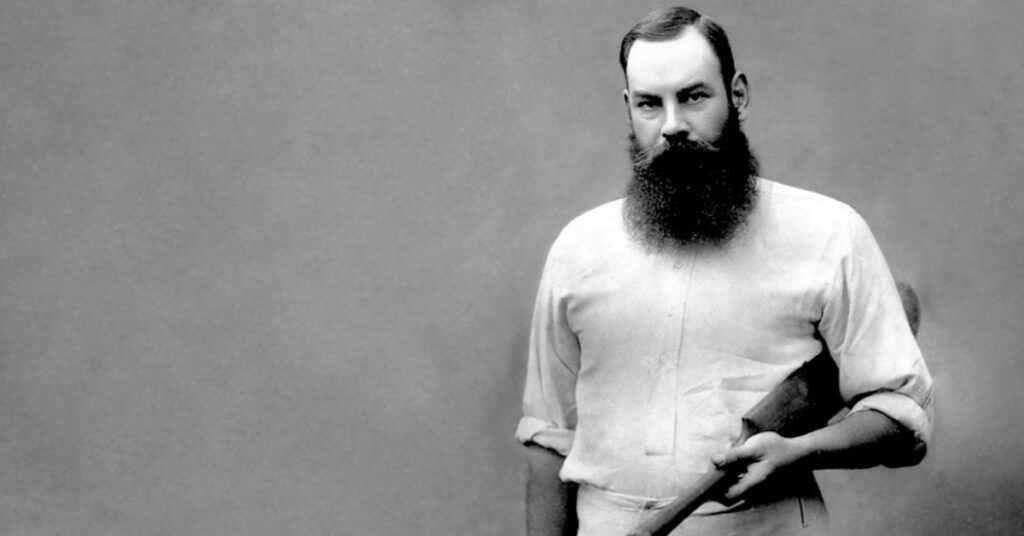
W. G. Grace epitomized Victorian ideals of leadership, innovation and cultural pride through his divine dimensions and beard. He made technical innovations which revolutionised batting while helping commercialize cricket.
Er had an immense influence over cricket’s laws, rules, and global structure – many modern batsmen credit his pioneering style with their abilities as players. Additionally, his charismatic influence brought technique and technique into a game which had once been predominantly rural and amateur.
He was a doctor
WG Grace was a doctor by trade, yet an avid cricketer. Considered one of the great batsmen of his era and considered “the father of modern batsmanship”, Grace revolutionized cricket by mastering all facets of batting and bowling – with his medical knowledge offering an edge when optimizing performances as well as revolutionizing training regimes for future generations of cricketers.
At his peak, he was nearly unbeatable at first-class level, boasting an aggressive style with fearlessness and unorthodox techniques that produced over 54,000 runs at an average of over 39 – an unbeaten run total that still stands today.
Home in Downend, he practiced under the patient guidance of his Uncle Alfred Pocock – himself an avid cricketer – and under his mother Martha who provided them with tea, biscuits, and rum. Martha would regularly watch over their practice at Clifton ground, correcting any poor stroke or delivery that was long enough.
He was a right-handed batsman known for his powerful and swift style of batting that often left opponents in awe of him. He preferred balls pitched off side, cutting with ease from deliveries many other batsmen would play on their front foot.
He was a gentleman
A gentleman is defined as someone with an appropriate code of conduct and respect for others, upholding the dignity of women without treating them as objects for sexual gratification, supporting a fair taxonomy system, and not using his position to make hasty decisions.
William Gilbert Grace (1848 – 23 October 1915) was an influential English cricketer and one of its greatest right-handed batsmen, leading his side for much of their careers as right-handed batsman and right-hand batting pioneer. Credited with helping transform underarm and primitive style batting into modern competitive form batting styles; also an accomplished all-rounder and widely considered one of the greatest ever to play the game.
Many sons of famous cricketers have followed in their fathers’ footsteps and started professional cricket careers of their own. We spoke to several of these sons to see what it was like following in their fathers’ footsteps as professional cricketers, and what their experience has been as being seen as “other” family cricketer(s).
He was a celebrity
William Gilbert Grace was an esteemed British physician and legendary cricketer, widely considered one of the greatest ever. His innovations and impact are indelibly marked on modern cricket as he pioneered modern batsmanship as an integral component. Grace can be credited for turning cricket from an amateur pastime into one of our popular cultural pursuits today.
He began playing for Gloucestershire in 1865, quickly rising to prominence with his large scores that made him “the biggest name in the game”. Over time, his fame spread across England; ultimately making his England debut in 1880.
His medical expertise allowed him to develop innovative training techniques for his team members, while also being an accomplished bowler himself – helping shape today’s rules of cricket as a result of this collaboration.
Though WG was an incredible athlete, his celebrity status sometimes interfered with his private life. He rarely spent time at home with his family, yet never shied away from posting to social media; his posts proved popular with audiences worldwide. Not only was he an incredible sportsman but also had an incredible sense of humor!
He shaped cricket
Grace had an immense influence on cricket during his lifetime, popularizing modern batsmanship and devising techniques to make batting more effective and efficient. Furthermore, he advanced batting technique and speed significantly while becoming one of the premier cricketers during the first half of the 19th century. Additionally, his impact extended beyond its confines onto culture as an event and social movement.
WG was tall and physically strong compared to his brothers EM and Alfred; this enabled him to easily play backwards against fast bowling while still scoring off slow balls with ease. Furthermore, he excelled as both lob bowler and fielder – his throws from the long boundary were fast and accurate, once even dispatching 76 flies with just one throw!
He pioneered chanceless batting, an approach which minimizes risk while increasing runs. A master at improvisation, he could score off pitches that most other players struggled to reach; as well as developing several new shots such as leg glance and cut shot batting styles. Widely considered one of the greatest cricketers ever played over 44 seasons of first-class cricket as part of its expansion and evolution.


More Stories
England Cricket Team Vs New Zealand National Cricket Team Match Scorecard
Indian Cricketers and Their RCB Net Worth
IPL Stumps Price: A clear and detailed guide